
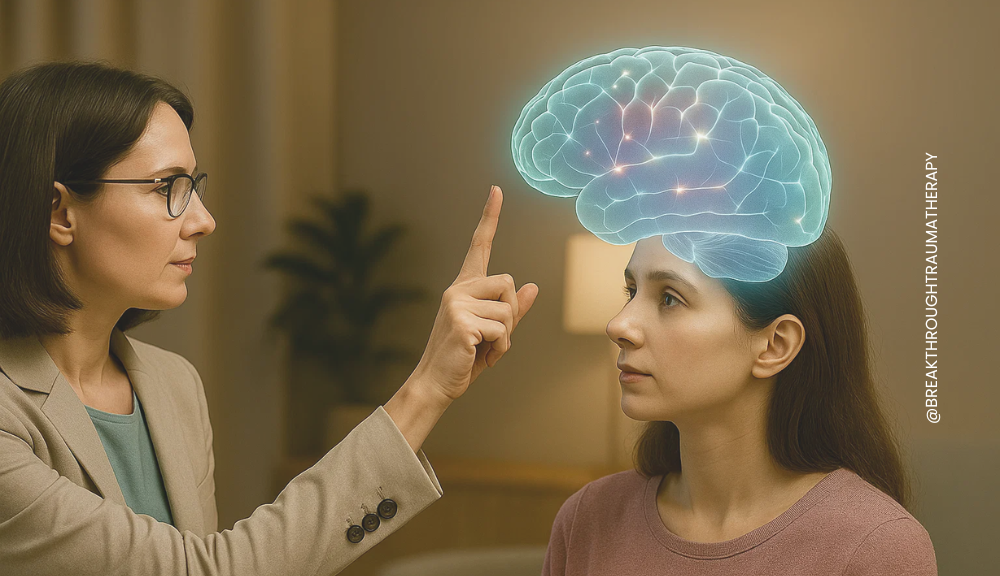
Did you know your brain can change and adapt from experiences, learning, and injury? This ability is known as neuroplasticity or brain plasticity. Behind neuroplasticity are nerves changing connections to form new networks and pathways. Psychologists develop targeted interventions to promote mental well-being by leveraging the brain’s plasticity. Eye movement desensitization and reprocessing (EMDR) therapy rewires nerve networks responsible for episodic memories or the memories of events in the hippocampus.
Understanding trauma’s profound effects on nerve networks is essential. Only by grasping the degree of disruption trauma creates can EMDR’s value stand out. Here is a comprehensive explainer on how trauma impacts the brain and how EMDR therapy helps reset the nerve networks.
How Trauma Affects The Brain
Trauma’s effect on the brain is vast and long-lasting without any immediate intervention. It affects thought and emotional regulation, learning, concentration, introspection, memory formation and recollection, and mood regulation. The brain regions affected include the limbic area, the cortex, and the brain stem. The limbic area contains the amygdala and hippocampus, the prefrontal cortex is in the cortex, while the hypothalamus is in the brain stem region. All these networks rewire the brain into survival mode after a traumatic event.
Trauma’s Effect In The Amygdala
The amygdala processes and stores distressful memories in response to fear, stress, or pain. It collects internal and external cues from nerves throughout the body. Once it decodes distress, it sends signals to the hypothalamus, which initiates the stress response.
Ordinarily, the stress response is the body’s defense mechanism in the face of danger or threats. It prepares the body for fight-or-flight. However, the chronic stress levels during a traumatic event overstimulate the amygdala, impairing its functioning.
Studies indicate a dynamic shift in amygdala size after a traumatic event. The size increases in children and decreases in adults. The size changes disrupt functioning. It boosts neural connections to the prefrontal cortex, a factor contributing to greater fear reactivity, lowered emotional regulation, and heightened sensitivity to perceived threats. Trauma also impairs the amygdala’s ability to distinguish real from perceived threats, triggering it to launch the stress response even in a safe environment.
Hippocampal Changes Due to Trauma
The hippocampus forms long-term and short-term emotional memories through a process known as encoding. It adds contextual cues and stores and retrieves these memories as required. However, trauma reduces the size of the hippocampus and disrupts its function. The disruption of function produces faulty memories that cannot link to healthy memory networks.
Trauma also increases neural networks between the amygdala and the hippocampus, which translates into intense emotional experiences. Recollection of the traumatic memories increases in frequency and spontaneity in the form of vivid and intrusive memories, flashbacks, and nightmares. The memories are fragmented and lack cohesion. Encoding mishaps also make it difficult to distinguish between the memory being a real event or a thought.
Trauma Interference In The Prefrontal Cortex
Trauma bypasses the cognitive aspects of the prefrontal cortex and augments the emotional response. Without the prefrontal’s ability to check emotional memories through logic and reasoning, trauma triggers an emotional avalanche in response to small distressing emotions.
Without a fully functioning prefrontal cortex, fear thoughts also go unchecked, leading to what is known as rumination. Rumination is a vicious and uncontrollable negative cycle of negative thinking. Each cycle reinforces all stress response networks.
How Does EMDR Therapy Rewire The Brain?
EMDR therapy undoes the effects of trauma by focusing on the hippocampus. The intervention operates under the Adaptive Information Processing (AIP) mode, which posits that reprocessing traumatic memories can neutralize trauma-based changes in the brain. The resulting healthy memories are modifiable, do not evoke intense emotional reactions, and can link with healthy memory networks.
The AIP model terms the faulty traumatic memories in the hippocampus as disjointed memory fragments. The encoding process fails to produce healthy memories during a traumatic event for several reasons.
● It receives faulty emotional data from a malfunctioning amygdala.
● The hippocampus inaccurately recodes cues such as spatial, temporal, linguistic, and emotional contexts, sensory details, and the internal state.
● It creates fragmented memories of events, which evoke an intense emotional response when retrieved.
The techniques in EMDR therapy activate both hemispheres of the brain, improving communication and initiating the reprocessing of faulty memories. After reprocessing, the hippocampus can add correct cues to the memory fragments and incorporate them into healthy memory networks.
The neutralized networks are no longer problematic. They do not present as intrusive thoughts or memories, flashbacks, or nightmares. The memories do not trigger the stress response or override the cognitive aspect of the prefrontal cortex. Thus, the reprocessing rewires the brain.
What Techniques Does EMDR Therapy Use?
EMDR uses two primary techniques: bilateral stimulation and focusing on a traumatic memory. Bilateral stimulation is sensory input administered by the therapist from left to right to activate memory reprocessing while you concentrate on one distressing memory.
Bilateral stimulation can be in visual form, using a finger or an object. The therapist moves the finger or object from left to right as you focus on one problematic memory. Auditory stimulation uses rhythmic sounds from the left to the right ear, while tactile stimulation requires tapping alternately on the palm of your hands or knees.
EMDR therapy does not require a deep dive into your trauma experience like in traditional talk therapy. After a session using the two techniques, the memory in focus ceases to become problematic. Trauma symptom intensity reduces considerably.
Can You Use EMDR Therapy With Other Therapies?
EMDR therapy is effective on its own. Nevertheless, you can use the intervention with cognitive and behavioral therapies (CBT) to develop adaptive coping skills. EMDR makes you more responsive to additional psychotherapies, helping you to reconstruct stable memories, regulate your thoughts, emotions, and behaviors using healthy mechanisms, and understand the impact of your trauma.
It Is Never Too Late to Live a Trauma-free Life
Trauma has the potential to impair your life, leaving you as a slave to your distressing experiences. Find a certified EMDR therapist to find much-needed relief from your ordeal. Start your healing journey today.
Contact Us